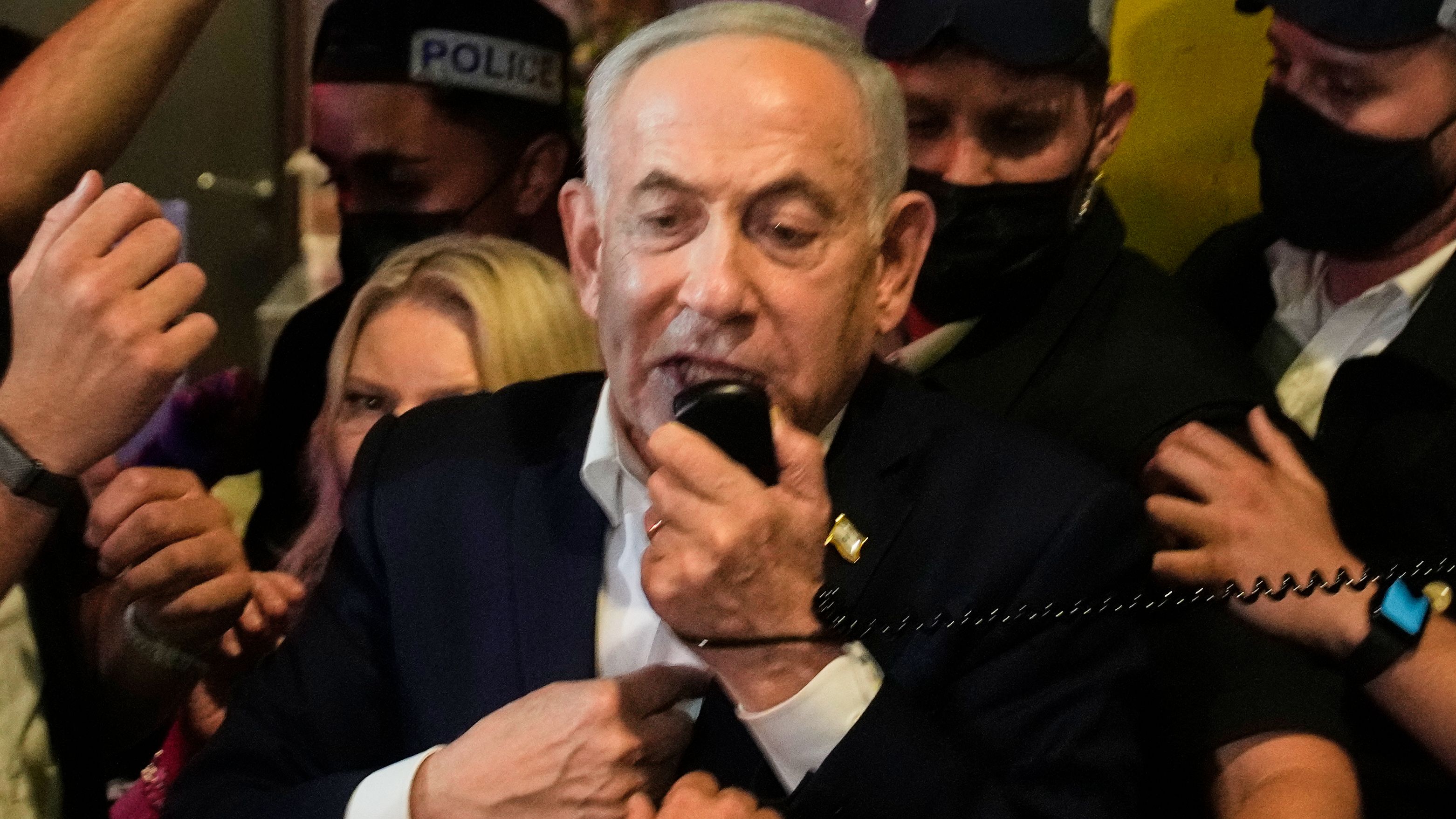
Israeli Prime Minister Benjamin Netanyahu announced on Friday the start of a large-scale military operation in the occupied West Bank, according to RTVE.es. The plan includes the forced evacuation of residents from Palestinian neighborhoods, house-to-house searches and the demolition of infrastructure.
The announcement followed a shooting near Hebron that left two Israeli soldiers dead, a toll the Israeli army confirmed. The attack also wounded five people, two of them critically, according to Israeli emergency services.
Why it matters
The operation is being described by Netanyahu as unprecedented in scope since the 1967 Six-Day War, RTVE.es reports. It comes days before Israeli elections scheduled for 27 October, a timing the prime minister himself linked to the attack.
The measures also affect a large civilian population. Israeli human rights group B'Tselem has called on the international community to act immediately to stop what it described as an "ethnic cleansing campaign in Hebron," according to RTVE.es.
What Netanyahu said
In a video message, Netanyahu said the Israeli Defense Forces would enter the neighborhoods from which the attackers came, remove residents, search homes one by one and dismantle what he called terrorist infrastructure. He said the military was ready for an operation "at a scale not seen since the Six-Day War," in 1967.
He also said that weeks earlier his government had warned of attempts by enemies to harm Israelis and soldiers ahead of the elections, and that this was what had been attempted near Hebron.
Separately, Netanyahu ordered a "total" and indefinite closure of the West Bank starting Friday. He said he had instructed the IDF and security forces to seal off the city of Hebron immediately and to prepare for a full closure of the entire West Bank region, which he referred to by its biblical names, Judea and Samaria. The closure takes effect the same day.
The prime minister tied the measures to counterterrorism, saying Israeli forces would keep pursuing members of Hamas and those who send them "everywhere and at all times." He added that the forces were operating with reinforced energy to thwart attacks and carry out waves of mass arrests.
Demolitions ordered and suspects identified
Finance Minister Bezalel Smotrich, a far-right member of the government, said on Friday that he had ordered the demolition of a long row of homes near the site of the shooting. In a message on social media, he described the buildings as illegal Arab structures adjacent to the attack site and said the order would be carried out within the hour, during the afternoon.
The Israeli army confirmed it had killed the two suspected assailants. They were identified as Mohamad Yaaba and Firas Yaaba, both 27 years old and residents of Hebron. According to The Times of Israel, cited by RTVE.es, the two were relatives, though their exact relationship has not been established.
National Security Minister Itamar Ben Gvir described the coming period as a "difficult morning" and said Israel could not allow what he called a "terrorist state" to exist in Judea and Samaria. He again called for the dismantling of the Palestinian Authority.
Rights group warns of repeat of northern camps
B'Tselem's executive director, Yuli Novak, said Israel was announcing its next crimes in advance. She said Netanyahu and Defense Minister Israel Katz had declared their intention to empty a Palestinian neighborhood in Hebron and to repeat the mass displacement and destruction inflicted on refugee camps in the northern West Bank.
Novak said Hebron was already under military cordon and that demolitions had begun near the site of the attack. RTVE.es reports that the group's statement was issued as a call for immediate international intervention.
The source reporting does not specify how many residents would be affected by the evacuations, which neighborhoods are targeted, or a timetable for the wider operation beyond the closure taking effect on Friday.
What to watch
The coming days will show how quickly the evacuations and demolitions proceed in Hebron, whether the full closure of the West Bank is enforced as announced, and how international governments respond to B'Tselem's appeal, all with Israel's 27 October elections approaching.